
We Widened the Radar: Knowledge Graphs, Semantic Layers and AI Context Are Now Tracked Topics
For weeks our market read kept ending on the same word: context. So we expanded the trend radar behind this feed. It now tracks semantic layers, context and knowledge graphs, and the standards beneath them through six new strategic lenses. Here is what changed, how to read it, and what the first sweep already shows.
A note to readers of our weekly market read. Status: 8 October 2026.
If you have followed this feed over the last few weeks, you will have noticed that every edition ended on the same word. Convergence won, and context became a contested asset. Process became the price of AI. Process context got its number.
That was the radar telling us something about itself. The interesting part of the conversation had moved to a place we were only catching at the edges: the semantic layers, context graphs and knowledge graphs that AI agents actually run on. So we widened the search. This post explains what changed and what the first sweep shows.
Why we changed it
Until now the radar was built around BPM, Enterprise Architecture, Process Intelligence, agentic AI and AI governance. Knowledge graph and semantic layer stories showed up only when they happened to mention one of those. A handful of "context graph" pieces surfaced over the summer, each tagged with low confidence and filed under general convergence.
That is no longer good enough. The semantic layer is being repositioned from BI plumbing to AI grounding infrastructure, and the BPM, EA and data communities are all claiming it from different directions. Our readers sit exactly where those claims meet.
What we changed
1. Three new tracked topics. Signals are now classified into three additional topics alongside the existing ones:
- Semantic Layer & AI Context Infrastructure - context engineering, GraphRAG, metrics layers, ontology-based context, MCP plus knowledge graphs
- Process & EA Knowledge Graphs - process and architecture repositories as graphs, and how they are built and maintained
- Graph & Semantic Standards Ecosystem - the standards and open-source stack underneath
2. Six strategic lenses. On top of the existing market clusters, every signal is now also read through six lenses that cut across them. One signal can sit in several lenses at once, which is the point: the vendor move, the standard and the compliance angle are usually the same story.
| Lens | What it watches |
|---|---|
| A. Semantic Layers & AI Context | Semantic layers as grounding infrastructure for AI and agents |
| B. Process × Knowledge Graphs | Object-centric process mining, OCEL, event knowledge graphs, process ontologies, task-mining semantics |
| C. EA × Knowledge Graphs | Architecture repositories as graphs, ArchiMate ontologies, the digital twin of an organisation, capability maps |
| D. Platform & Vendor Moves | SAP, Celonis, Signavio, ARIS, Microsoft, Snowflake, Databricks, Neo4j and others staking out the context layer |
| E. Standards & OSS Ecosystem | GQL, SHACL, RDF and SPARQL, semantic interchange standards, graph database licensing |
| F. Governed / Regulated Angle | Computable compliance, controls as code, GxP and auditable AI answers |
3. A wider source sweep. The search now reaches into communities we previously saw only second-hand: data and analytics engineering, graph technology, and regulated life-science IT, including hiring signals, which often reveal a strategy before the press release does.
What the first sweep shows
A word of caution first. The lenses went live this week, so every count below is a first-week count with no baseline behind it. Read them as coverage, not as a trend. Trend arrows become meaningful from next week.
First-week volume per lens: A 35, D 23, F 16, C 11, B 10, E 10.
Four patterns stand out already.
Every platform vendor wants to be the context layer. SAP positions Joule, Business Data Cloud, SAP Knowledge Graph and Signavio as one context and coordination layer. Celonis is marketing and hiring around its Context Model as a living digital twin of the enterprise. ARIS now describes itself as the leader in "Process Context for Enterprise AI". Microsoft presents Fabric IQ as a governed context layer built on semantic models and ontologies. Neo4j pitches the knowledge graph as agent infrastructure for context, memory and reasoning. Five vendors, five starting points, one destination.
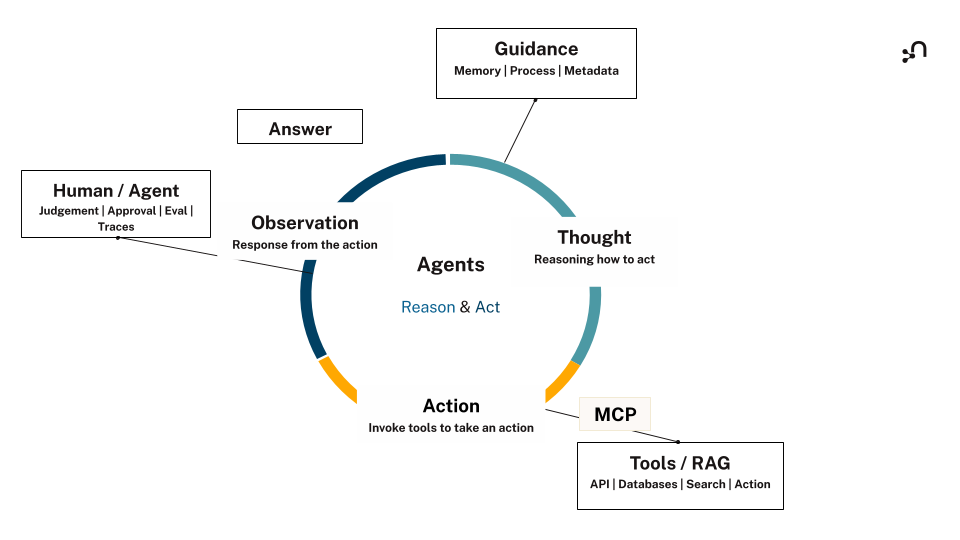
What an agent needs from a graph: a way to retrieve and act, and a way to remember. Image: Neo4j, from "Wherever you're building agents, Neo4j is already there" by Michael Hunger, Kate Smith and Asad Ali, 6 October 2026. © Neo4j, Inc.
MCP is becoming the delivery route for context. Data platforms and data providers are exposing governed semantics to agents through the Model Context Protocol. The counter-signal matters just as much: one survey in the sweep reports that most enterprises still feed agents through document retrieval or direct system queries rather than a governed semantic layer, and that direct querying is growing fast. Agents are increasingly bypassing curated definitions.
Portability is getting a standard. The vendor-neutral semantic interchange effort is gathering contributors from across the data platform market. If it holds, business definitions could travel between platforms instead of being rebuilt in each one.
Regulated industries are turning context into a compliance requirement. Pharma and medtech signals, from conference sessions to job postings, treat knowledge graphs and semantic layers as the basis for traceable, auditable AI answers under GxP. In these industries graph-grounded retrieval is no longer an enhancement. It is how you pass the audit.
What changes for you as a reader
- The weekly market read gains a standing section on context, knowledge graphs and semantic layers.
- Vendor moves are read against one question: who ends up owning the meaning your AI runs on?
- The regulated angle gets its own lens, so readers in life sciences and other audited industries can follow it directly.
The bpExperts read
We did not widen the radar because knowledge graphs are fashionable. We widened it because the question we have been asking all autumn - who owns the context? - is now being answered in architecture decisions, standards bodies and job descriptions, and much of that happens outside the classic BPM press.
Our position is unchanged. Your process knowledge should live in a semantic core that you own, that is portable across tools, and that people and agents both start from. The expanded radar is how we keep that position honest: by watching every camp that claims the context layer, not only the ones we already know.
Why bpExperts, and where to start
A context layer is not a product you install. It is your processes, your architecture and your business definitions, made consistent enough that people and AI agents can rely on them. That is BPM and EA work before it is AI work, and it is the work we do every day.
Three things make us the right partner for it:
- We start from process, not from the model. With Business Flows we bring end-to-end reference content for how a business actually runs, so your semantic core does not begin with a blank page.
- We build it as a graph you own. BT Brain holds processes, requirements, applications and compliance obligations in one knowledge graph that people and agents both start from, independent of any single vendor's version of the truth.
- We work across the tools you already run. SAP Signavio, ARIS, Celonis, SAP Cloud ALM and LeanIX are our daily environment. We connect them rather than replace them, which is exactly what a portable context layer requires.
Few firms combine deep BPM and EA practice, SAP transformation experience and hands-on agentic AI engineering in one team. We do, and we use our own tooling on our own engagements every day.
If you are deciding this quarter how AI, your context layer, EA and BPM fit together, talk to us before a platform decides it for you. Ask your bpExperts contact for a context-readiness conversation: where your process knowledge lives today, who owns it, and what it takes to make it ready for agents.
And if there is a source, standard or community we should be watching, tell us. The radar gets better with every pointer.
Sources
- Microsoft Azure Blog: FabCon and SQLCon 2026 in Barcelona: Building the data foundation for Microsoft Copilot and agents
- Forrester: SAP Connect 2026: Four decisions CIOs must make before SAP agents execute enterprise work
- SAP News Center: Joule Work and SAP Business AI Platform
- Business Wire: ARIS strengthens global leadership team
- Neo4j Blog: Wherever you're building agents, Neo4j is already there
- VentureBeat: Companies are building governed semantic layers. Most say their AI agents are getting context somewhere else
- Techzine: Microsoft and Google to contribute to the Apache Ossie project
- Mareana: Pharmaceutical inspection readiness