
Spring cleaning rituals in SAP Signavio (using API & Scripts)
"For the sake of the efforts invested in building BPM content and the BPM community, the objective of introducing process-centric thinking is not merely to 'survive' one project; it's about establishing BPM principles fo
"For the sake of the efforts invested in building BPM content and the BPM community, the objective of introducing process-centric thinking is not merely to 'survive' one project; it's about establishing BPM principles for the long term.
In this context, many analogies can be drawn to living in a house.
The 'fast and furious' approach to setting up a repository is all about moving in. You may recall being invited to help somebody move, and you arrive on time, only to find that nothing has been packed efficiently (or at all). Everything is then dumped loosely into the lorry, requiring you to make two trips. Upon reaching the new house, the boxes haven't been labelled properly for the helpers to know where to place them.
Now, let's assume everything went well, and you have settled down. Over time, changes occur: new processes are introduced, processes are optimised and updated, and new use cases require you to adapt the methodology, add attributes, and maintain process owners, etc.
In real life, this is the situation of living in a house over time. If you are single, you may be able to control what happens. However, the BPM house is more like living in a house with four kids, a dog, a husband with many hobbies, and a tendency to collect and keep things 'just in case.' Everyone is constantly bringing things home and dumping them somewhere. Of course, you have house rules; however, not everyone may pay the necessary attention. So, every now and then, you (your family) need to tidy up.
Does this sound familiar? Yes, and everyone working in a BPM organisation will understand what I am talking about when it comes to housekeeping your BPM house.
The question is, what capabilities are required to support your housekeeping? Beyond the obvious semantic check and quality assurance of maintained attributes according to your conventions, there are additional questions that need answering:
Are there redundant diagrams or dictionary items (duplicates)?
Are all diagrams placed in the correct folder, and dictionary items placed in the right category?
Are all diagram assignments consistent and correct?
Is the naming of objects in diagrams and linked dictionary items consistent?
Which 'orphaned' diagrams and dictionary items are there?
Getting these questions answered can be very time-consuming. Analogously to our script-based approach for migrating content, we have developed a report that answers these questions and will be as helpful as a Dyson vacuum cleaner when it comes to housekeeping in SAP Signavio. Basically, it extracts all the metadata from the repository and presents it to you in a manner that helps identify all the elements you need to check and consolidate.
The following figure shows you an extract with some example findings:
[caption id="" align="alignnone" width="938"] Fig. 1: Mismatch of task and assigned diagram [/caption]
A good practice is to be consistent about naming a task and the assigned diagram. It can be tedious finding mismatches or just typos. Here the report directly shows discrepancies.
[caption id="" align="alignnone" width="732"] Fig. 2: Orphaned diagrams in temp folders [/caption]
Many times diagrams are drafted and placed into temp folders. When looking into the search, you may therefore find multiple entries. Tidying up regularly helps.
[caption id="" align="alignnone" width="687"]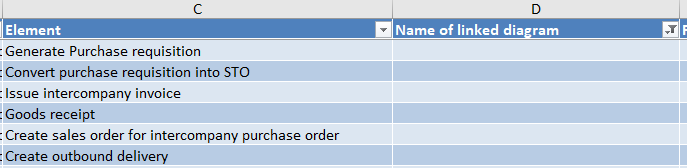 Fig. 3: Process without assigned diagrams [/caption]
Also, depending on your conventions, you want to check if all process hierarchies can be drilled down according to your hierarchy. Checking all models can take some time. Here again, the report helps identify processes you need to check.
To summarize, housekeeping your process repository is essential to keep the usability and overall value high. The more mature your process repository becomes, the harder it is to maintain a high quality. The in-built reports don't support you sufficiently as they neglect your individual use case, process architecture and conventions. With the help of little 'helper-scripts' the work can be made much easier
We are convinced this little tool is of great household use, and everyone should have one. So, if you are interested, maybe you could reach out to us, and we can schedule a free demo, or discuss your specific requirements."
]]>