
What the ARIS Partner Summit & Roadshow 2026 Confirmed About Enterprise AI — And Where BT Brain Already Stands
Only 5% of enterprise AI initiatives reach successful scale, per BCG research shared at the ARIS Partner Summit & Roadshow 2026 in Frankfurt — and the gap wasn't about technology. Here's what the event confirmed about where AI actually creates value, and where BT Brain already stands relative to it.
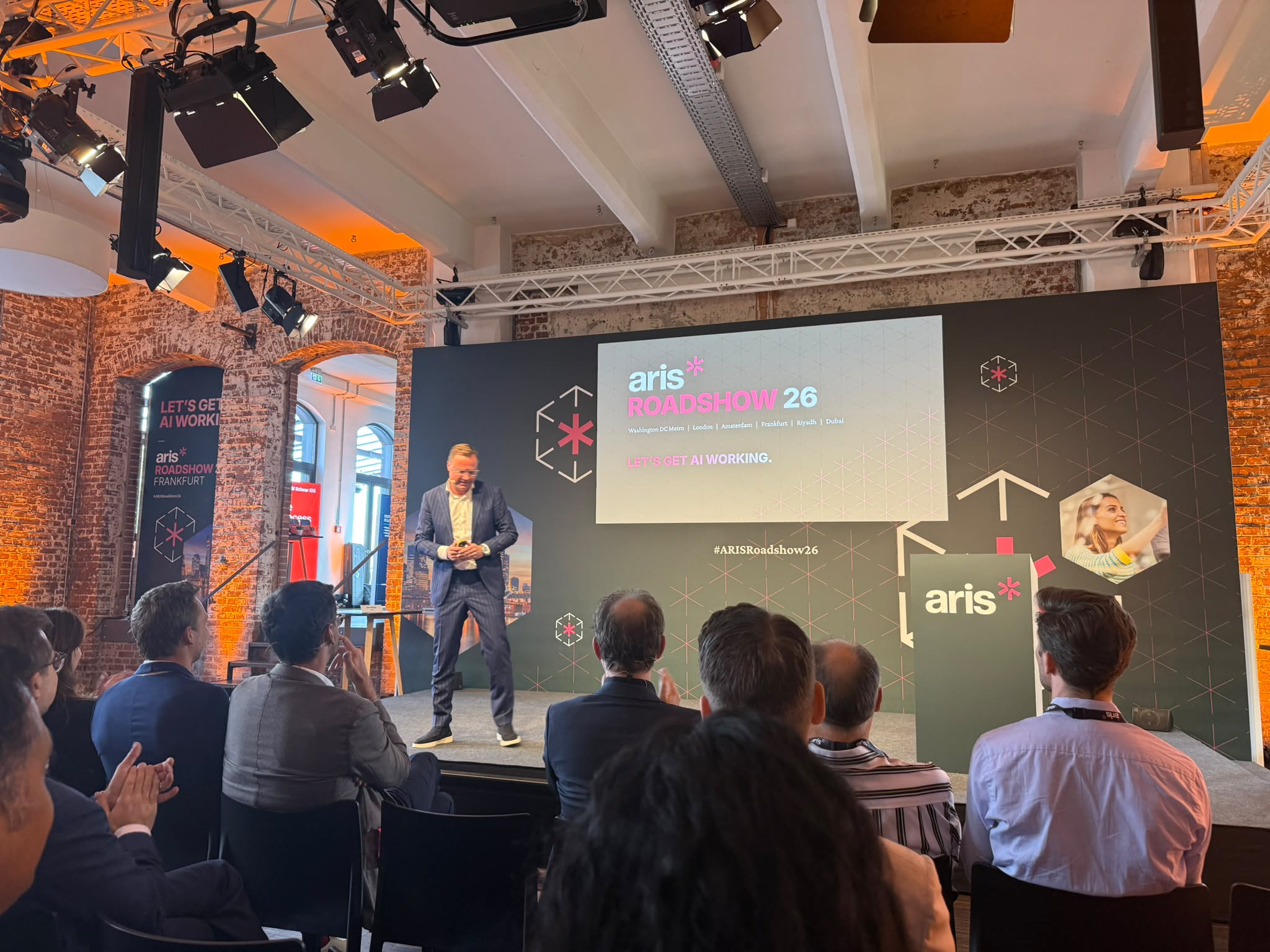
Did you know that only 5% of enterprise AI initiatives actually reach successful scale? Roughly 60% still show no material business value. That was the headline BCG research shared at the ARIS Partner Summit & Roadshow 2026 in Frankfurt, where we spent two days across both the partner and roadshow tracks. It's a striking number, but it wasn't a surprise to us — it's the same pattern we see across every industrial enterprise we work with. The interesting part wasn't the failure rate. It was what separated the 5% from everyone else.
The numbers behind the hype
BCG's research broke down why most AI initiatives stall, and the reasons were rarely about the technology itself. Unclear ROI was the most cited hurdle, followed closely by missing skills, unmanaged change, weak governance, slow decision-making, and — perhaps most tellingly — an inability to get past the pilot stage at all. As a heuristic, BCG put it at roughly 10% models, 20% technology and data, and 70% people and process. The platform is necessary. It's not where the value comes from.
What the roadshow actually showed
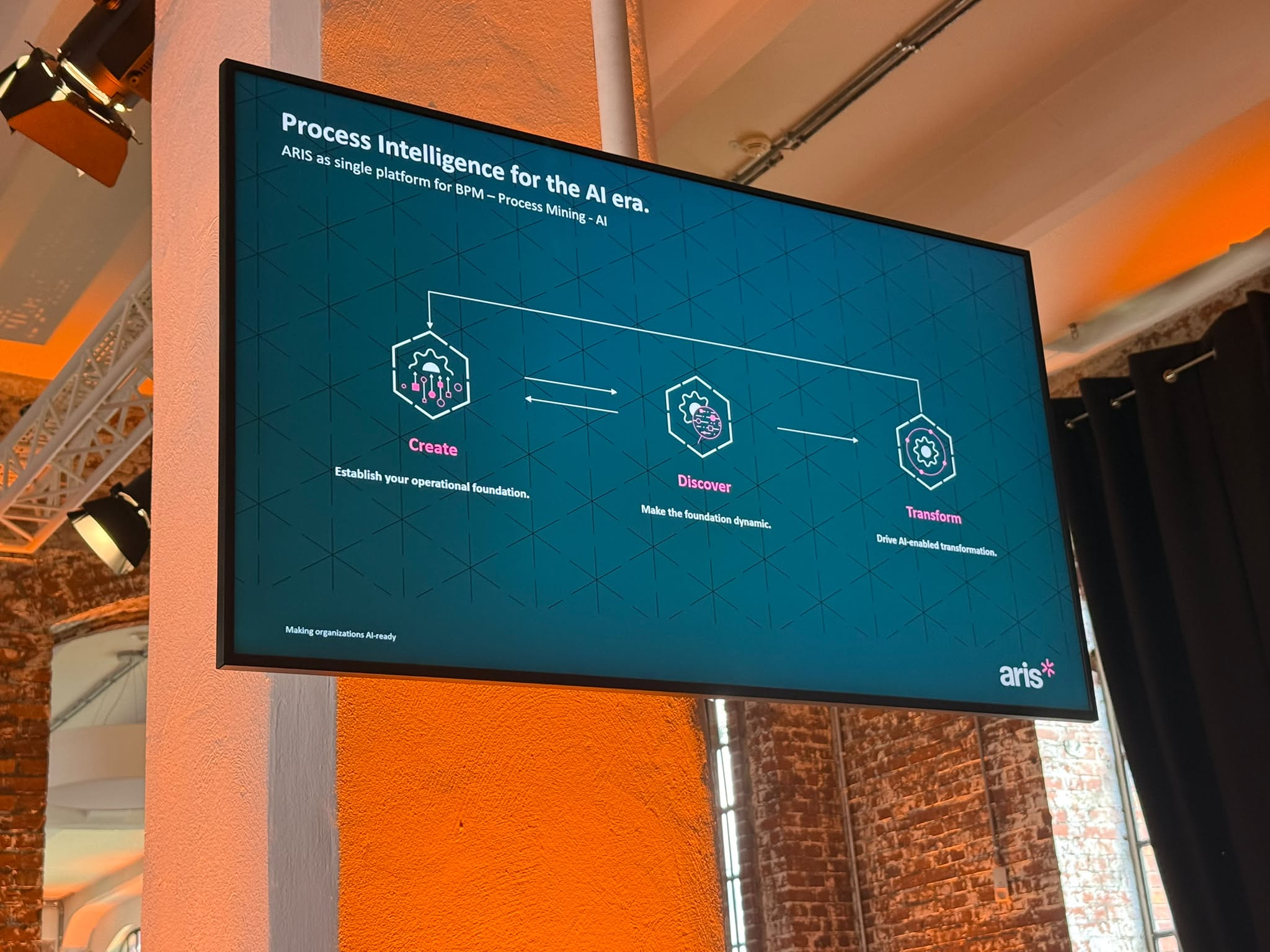
ARIS structured its own message around a similar idea: BPM, Process Mining, and AI as one continuous loop, running from scoping a business question, through designing and deploying an agent under control, to observing and assuring its behavior in production. Four layers of context have to be in place before an agent can act reliably — what the task is, what the data says, what the rules and roles are, and what state the operating environment is currently in. Skip any of them, and you get an agent that's technically working but practically untrustworthy.
The customer stories on stage backed this up, and the pattern repeated across very different industries. An insurer's process-mining work on claims routing showed that transparency alone — before any AI decisioning was even introduced — cut misassignment significantly. A document-review use case built on LLMs showed a real reduction in first-pass review time, but only once the underlying process had been structured and standardized. Airbus is investing in supply chain resilience and tighter compliance controls before layering in more automation. Bentley is scaling process governance across more than 600 processes — repository, ownership, standardization — as the groundwork for AI, not an afterthought to it. None of these companies scaled AI first and figured out the process later.
The common thread: process before agents
Strip away the industry differences and the lesson is consistent: the agent is rarely the bottleneck. The bottleneck is whether there's a shared, current, trustworthy model of how the business actually works — one that both people and AI systems can act on with the same understanding of what's allowed, what's correct, and what "good" looks like. Without that foundation, autonomy is just risk with better UX.
Where BT Brain already stands
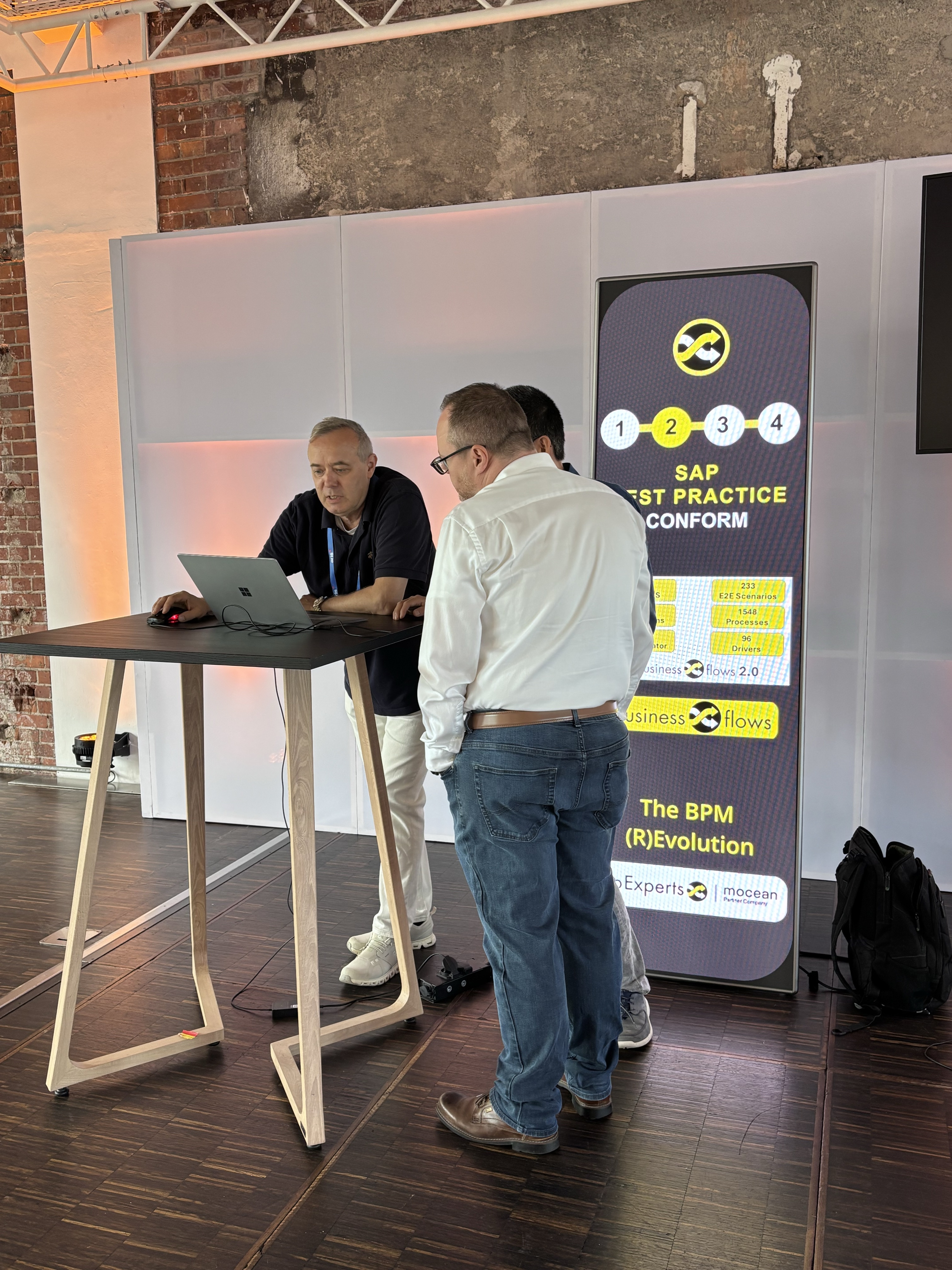
This is exactly the thesis we built BT Brain around, and the roadshow confirmed it rather than taught it to us. BT Brain is built on three layers that map directly onto what ARIS was describing on stage. Business Flows is the content layer — a connected knowledge graph of industry best-practice and SAP-aligned processes, instantiated as a living digital twin that teams, consultants, and AI agents all draw from as one shared source of truth. The Business Flows Assistant is the interaction layer, making that model queryable in plain conversation rather than buried in documentation nobody reads. And the Agentic Transformation Suite is the agents layer — AI methods that act against that process content directly, with governance and human oversight built in from day one rather than retrofitted after something goes wrong.
The roadshow confirmed the direction the market is moving. We're not reacting to it — we're already building past it.
What this means if you're starting now
For any organization weighing where to begin, the sequence that keeps showing up — at the roadshow and in our own client work — looks roughly like this: start with the business question that actually matters, establish the process foundation and baseline before anything else, define the data, rules, and access boundaries an agent would need to respect, only then bring in a scoped agent with a clear integration path, and build in the monitoring and feedback loop from the outset so behavior stays measurable and correctable over time. Autonomy should increase step by step, backed by evidence, never all at once.
Process management isn't a supporting function for AI anymore. It's the control layer.
If you missed us in Frankfurt, we'll be at the next stops of our autumn roadshow — Stuttgart (September 30–October 1) and Berlin (October 13–15) — talking through exactly this. Or take a look at what BT Brain already does at bpexperts.de/platform.
— The bpExperts Team