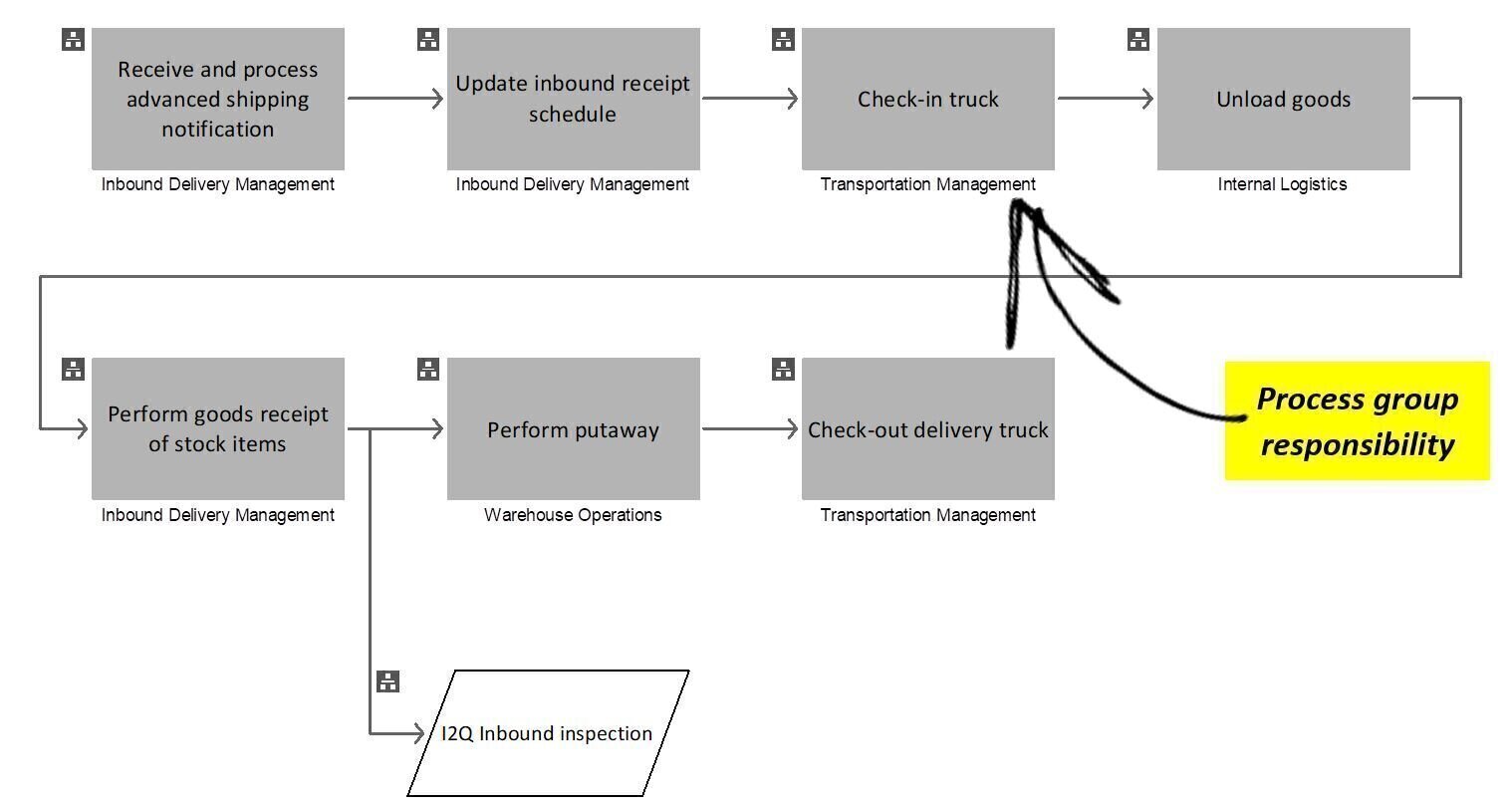
For the sake of ‘house-keeping’ this set of (unique) processes requires a structured view on the process inventory. This is typically accomplished in a repository by sorting the processes into process groups according to functional criteria.
We, frankly speaking, didn’t publish the process groups until now, as we didn’t want to distract from the core E2E focus of Business Flows.
Using Business Flows in various customer situations has shown that a reference model for the functional grouping of processes as well as a structured repository (defining the business process master list, BPML) is of great benefit.
We are, therefore, happy to announce that we have updated our published architecture and conventions in order to bring you another perspective to Release 4 of our Best Practice Reference Model: Process Groups.
Process Groups
The introduced process groups are structured according to the SCOR top-level entry structure. Leaning on this widely used framework simplifies initial orientation for process experts with various backgrounds without limiting us to functional silo thinking.
Our Process Groups cluster individual processes in a functional representation similar to operational departments. For example, within the Customer Relationship Management functional group you will find a collection of processes for strategically shaping the relationships and interactions of an organization with existing and potential customers, including planning and execution of campaigns, gathering and qualification of leads, and the generation and distribution of marketing materials. Our classified functional building blocks offer a streamlined approach to gather the relevant business experts to review, adapt, and agree the reference model according to their business operations. In this sense, the combination of the Process Library and E2E view accelerate adapting operational processes to support company strategy.
We adopted established SCOR framework terminology across the supply chain: source, make, store, sell, and service and extend it by design, plan, service, integrated management system, enterprise management, and quality & compliance management.